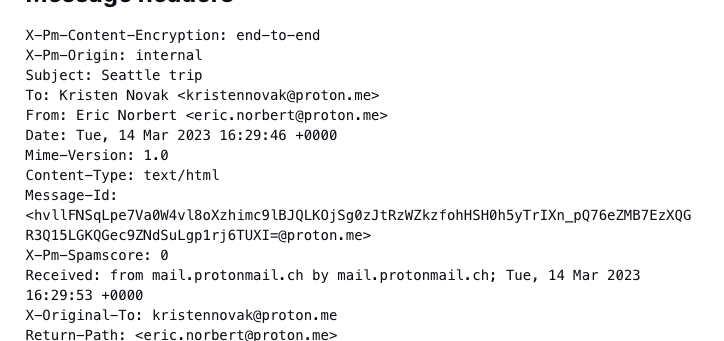
The internet was a pretty different place when I got on it in 1994. Using the internet with a GUI (normal computer) was a rarity. Nearly everyone online used the command line when interacting with the internet. Email, Web Browsing, Gopher, Telnet, FTP, Usenet, all of it was on the command line.
This post is about some of the things we did back then that may seem crazy now.
Spoofing Email
These days with all the spam in the world, mail servers are locked up pretty tight, and there are all sorts of things to ensure that the person sending email is real and it should go where it’s sent. Back then there was NONE of that. Spam didn’t exist yet when I got online.
Something we did early on was use telnet (a tool for connecting to the command line on a remote computer) to log directly into a mail server. There weren’t any usernames and passwords, anyone anywhere could log into every mail server in the world.
We’d type in mail headers like this:
HELO
TO: myfriend@example.org
FROM: god@heaven.org
You should stop going to naughty BBSs
.
And that would send a message from God to my friend. The period at the end was how you ended a message.
I went to a conservative Christian college, and email was new enough that some people really thought God was emailing them, and it caused some issues.
Can you imagine what spammers would do with this power today?
Connecting via anonymous phone numbers
When I got online we had 2 ways of being on the internet.
The school had a MIND BLOWINGLY fast T1 connection shared by the entire school. It was 1.544 megabits per second. For perspective, your average cable internet speed is about 100 Mbps and fiber (at my house) is 1000Mbps.
Anywhere else we used a modem, which at the time was just upgrading from 14.4 kilobits per second to 28.8. But for this to work you needed someplace to dial that offered internet. In my city we had the Grand Rapids Freenet, a free internet provider. It had 4 modems, so 4 people in the entire city could get on at the same time.
There weren’t any commercial ISPs yet. It didn’t take long, by 1996 there was a one local ISP and a couple national ones like Earthlink. But for a while, getting online via modem was HARD.
Then one day I found a 1-800 number that provided internet access. I don’t remember at ALL where I found it, but if you dialed it, you got shell access and could telnet anywhere in the world. I have no idea who owned it. It could have been a business, a school, the CIA, anyone at all.
At one point I thought “maybe I should know whose this is” and did some research. I got some clues that it was answered someplace in Ohio, but who knows?
I just dialed into an anonymous phone number and did my internet stuff.
Using a public, shared, web browser
When we got internet access at school, tools were rolled out slowly. First we got email. Then we got Gopher and telnet. Web access via the Lynx browser came much later.
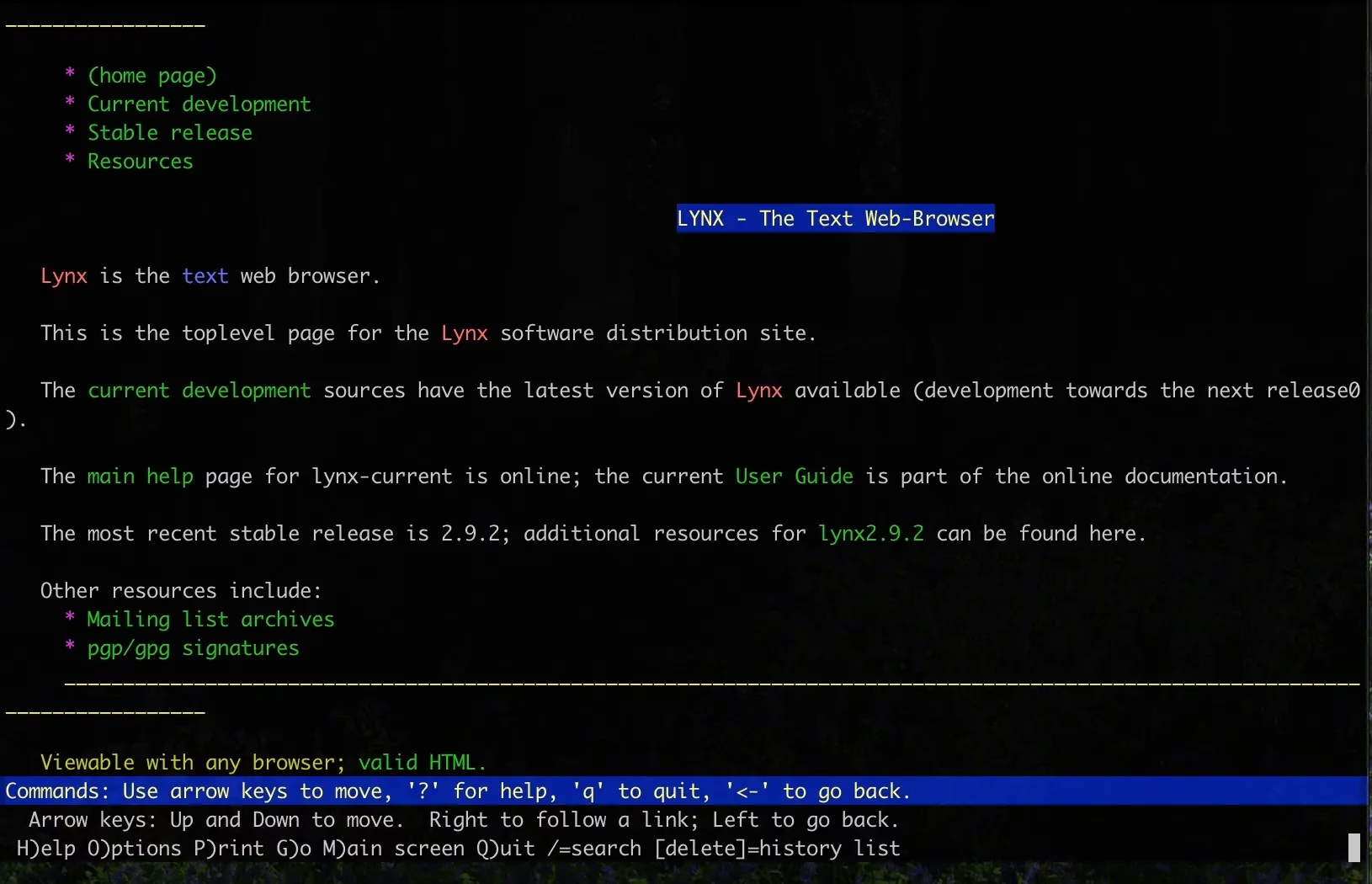
Fortunately, there were places online you could telnet and use Lynx. My favorite was the University of Colorado. You’d simply telnet to the right domain name, get a shell, and type “lynx” and you’d be browsing the web. Thousands of people used this all the time. It was before things like caching, cookies, or any kind of stored data, so it’s not like you were leaving tracks. I strongly doubt they were logging what sites people viewed. I’m not sure that’s even possible with lynx.
You can still use lynx today, I took this screenshot just now on my mac:
Easter Egg Hunt
Before the web was popular, people used a menu based system called Gopher, here’s a screenshot:
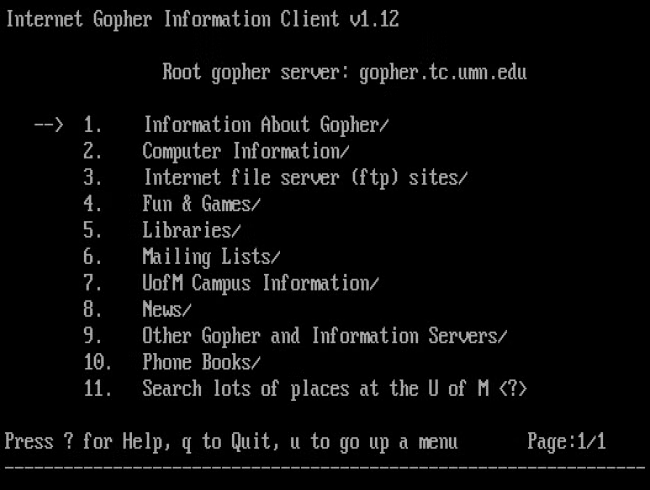
Places hosted Gopher servers just like places host Web servers. They could link to each others docs in the Gopherspace.
Someone made an easter egg hunt for it. Gopher servers all over the world made little nodes that you could find in their menu systems. Whoever won got to be known as the person that won. They did this for a bunch of years. Keep in mind that the internet was small enough that most of the servers in the entire world could (and did!) take part, and it was still doable by individuals without scripting or AI. Just visiting all the servers and finding them.
The End
If I think of more stuff I’ll post it.